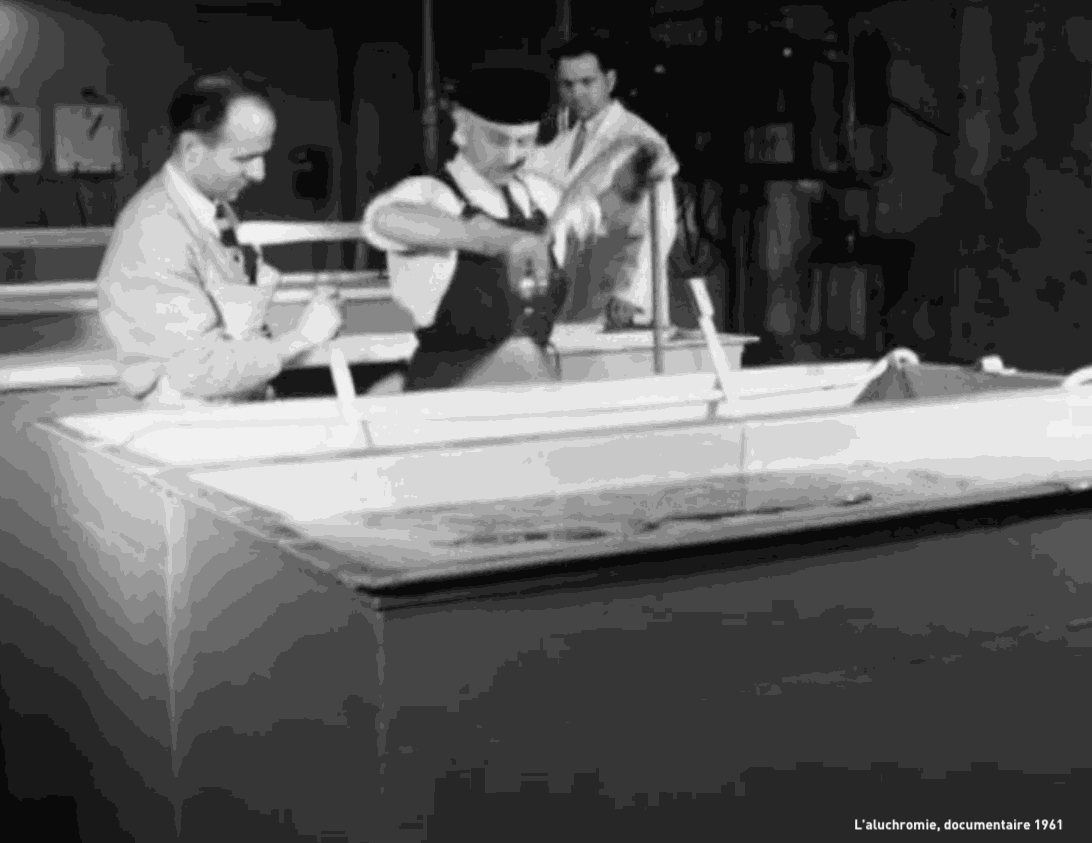
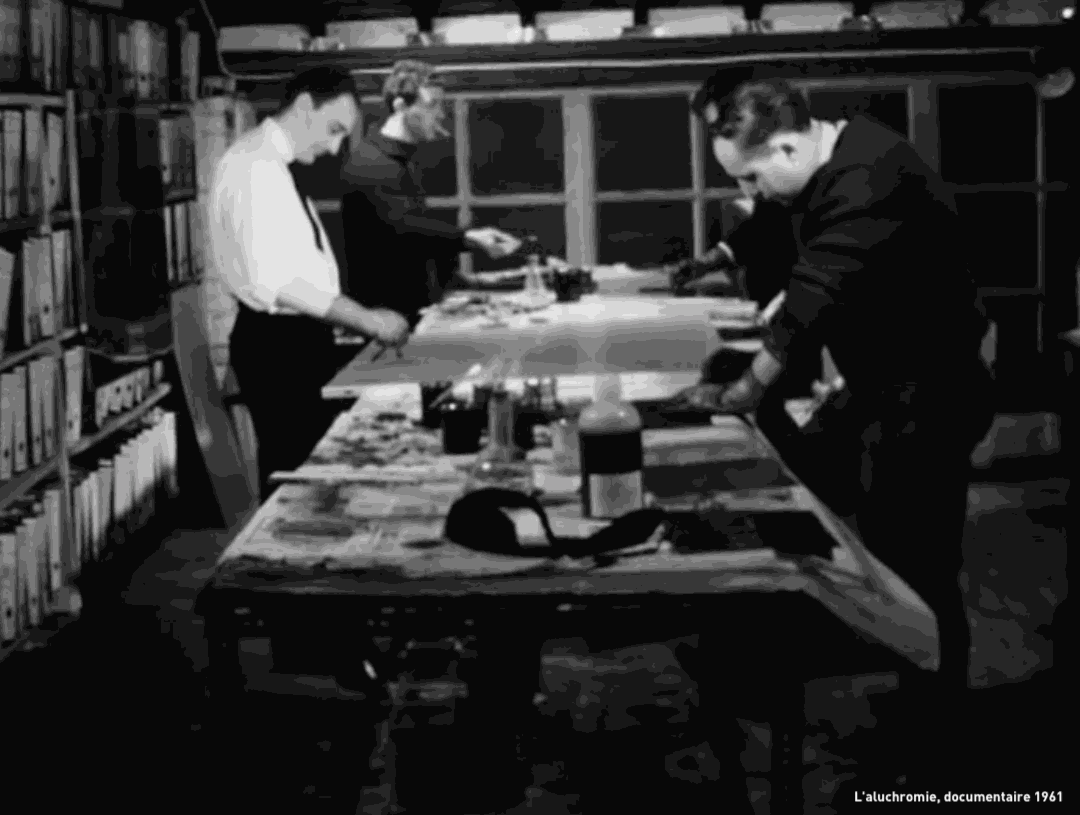
Aluchromie is a technique to fixate pigments on aluminium developed around 1961 by Ralph Cleeremans and Pierre Leloup. That same year, the "Group of Belgian Aluchromists" would be founded, including members such as Walter de Buck, Carlo Crivellaro, Octave Landuyt, and Serge Vandercam. With help of the engineers of BASF, the technique would be further refined. Their first joint work was a cube of 4 meters, to be exhibited on the Rogier square in Brussels. While the group never came to a joint artistic language other than sharing a technique, a manifesto was produced calling for a new form of beauty, coherent with the means of the time and allowing for an experience of the future.
In interviews, Ralph Cleeremans mentions the influence of the Brussels World Exhibition of 1958. In the preparation for this event, and in the following years, the scale of architectural intervention in Brussels had changed drastically. Major infrastructural works were taking place and large buildings were being erected. Using aluminium as a canvas allowed the Aluchromists to conceive of new ways to integrate their art in these projects.
In 1963, the Aluchromists started working on a series of works for integration in the Rijks Administratief Centrum (RAC), a building so big (141.621 m²) that it received its own postal code. Part of the intervention took place on the elevator doors that were decorated by Jean-Marie De Busschère. Ralph Cleeremans produced a series of panels for the cantine, designed to accommodate the Cité's 14.000 workers. The works were lining the columns of the mezzanine. In 1966 the group is disbanded as disagreements rise because the state never paid for the works produced.
In 2003, the Federal state decided to abandon and sell off the property. The regionalisation of several departments had made the building to big for the Federal state alone. Renovation would have to include the removal of asbestos. In 2006, Ralph Cleeremans was invited by the new owner to retrieve from the building the panels he had produced, but had never been paid for. The elevator doors, lined in asbestos, were unsalvageable, but with help of a few friends the artist demounted the panels that lined the columns. They would be stored temporarily in the workshop of an artist friend, were they ended up staying a full decade.
RotorDC was contacted to help find a suitable destination for 16 series of panels.
More information :
- L’aluchromie, a 1961 documentary made by the Belgian national television
- Aluchromisten, entry on the German spoken wikipedia
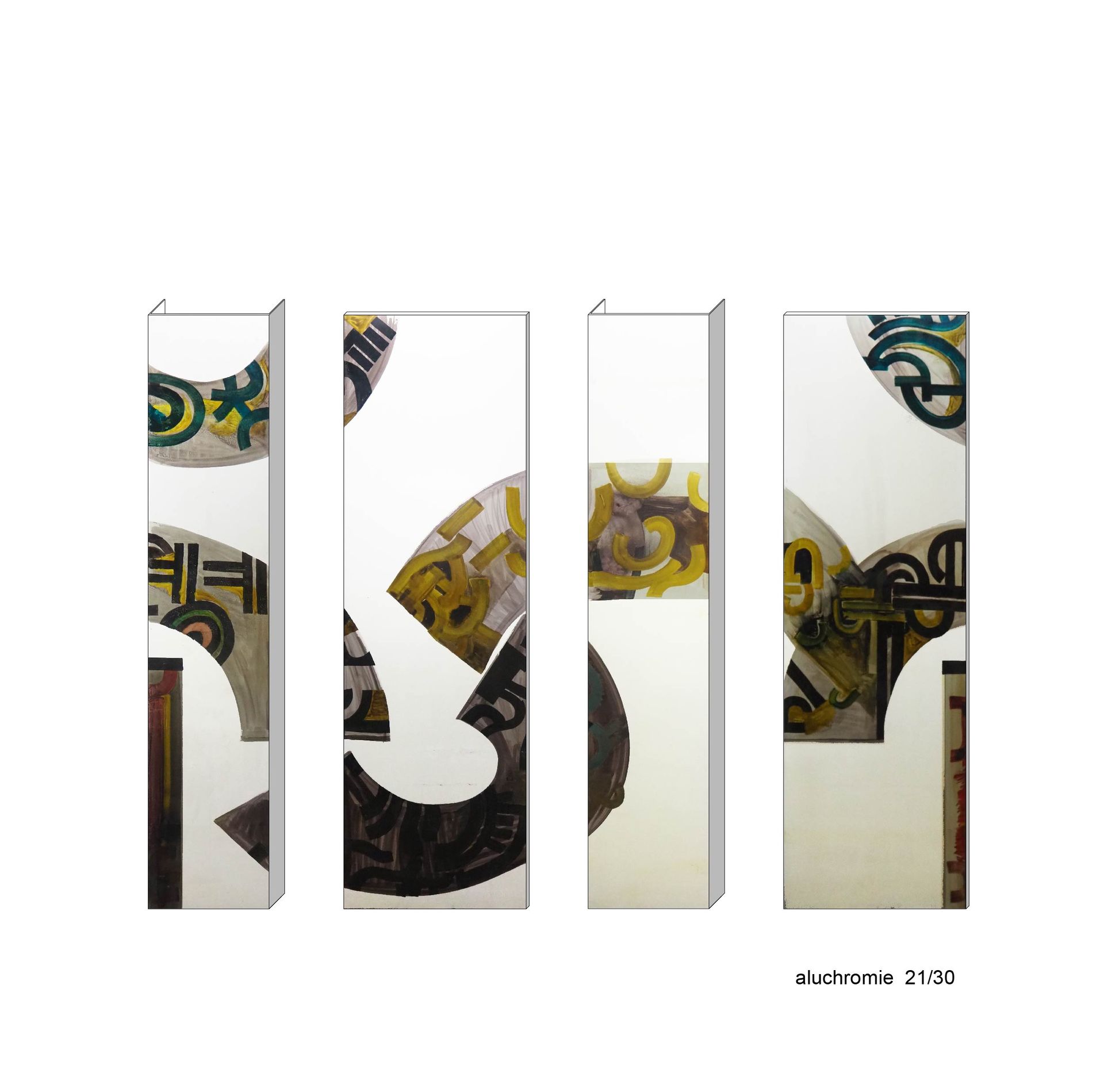
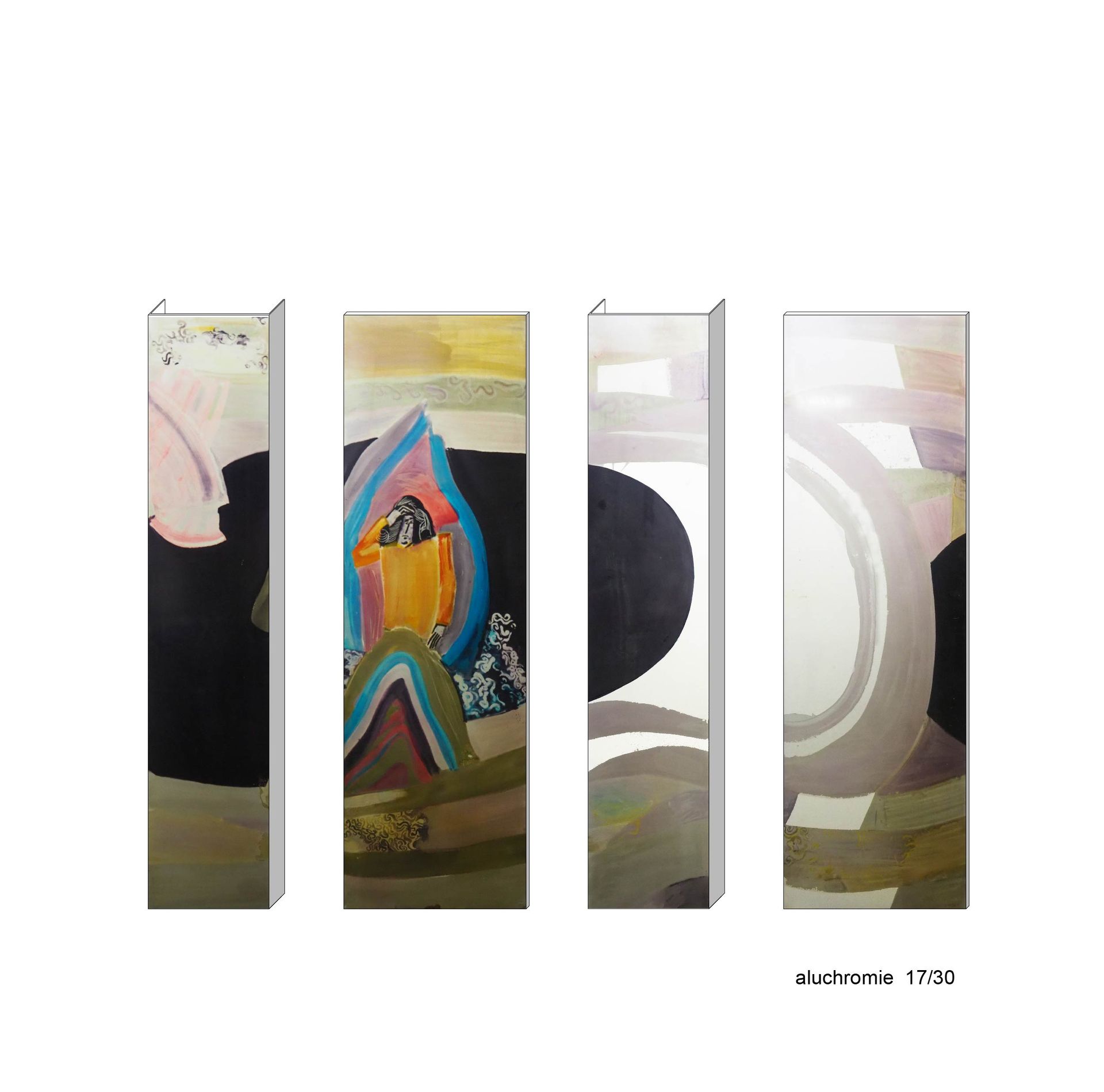
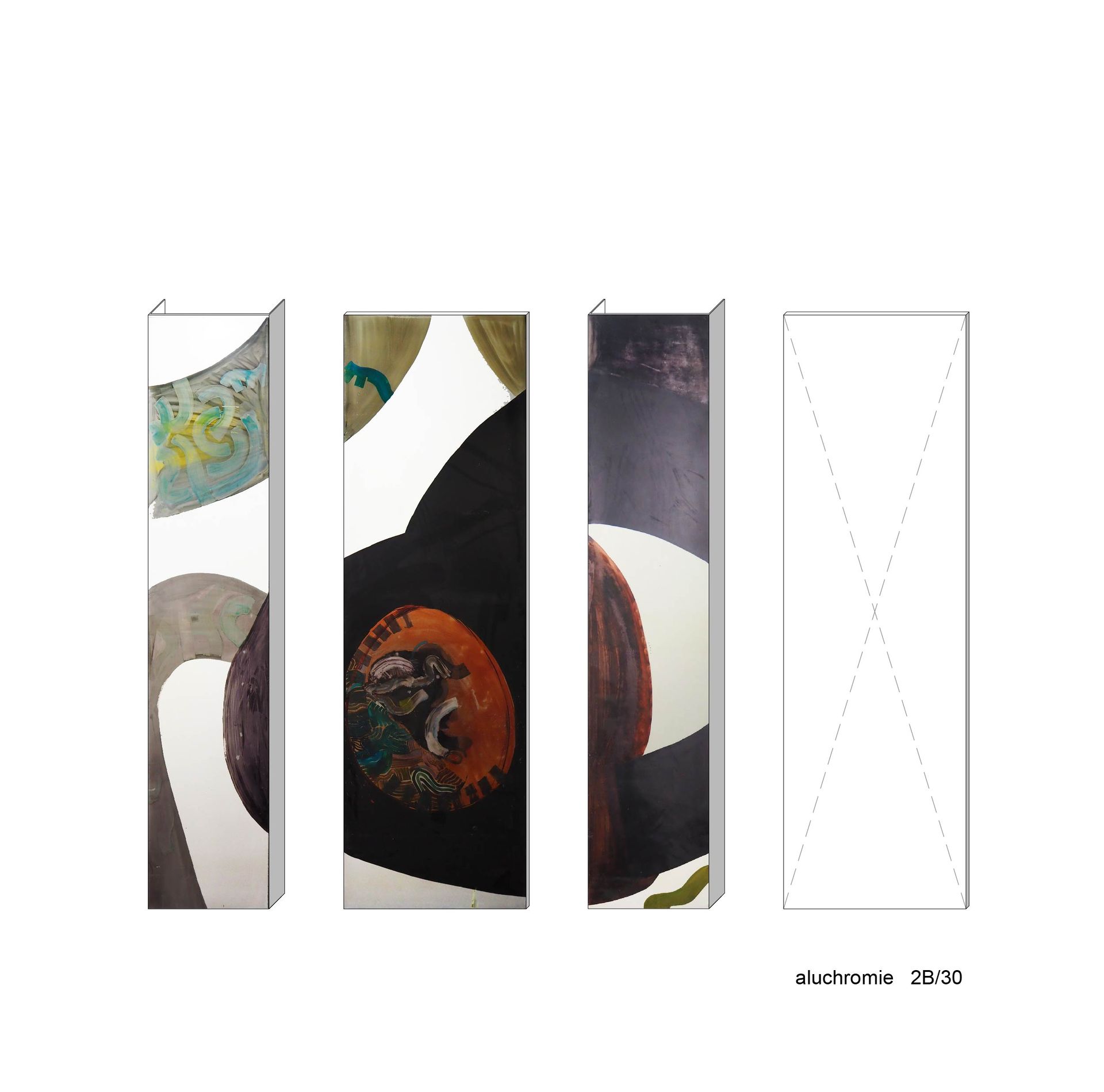
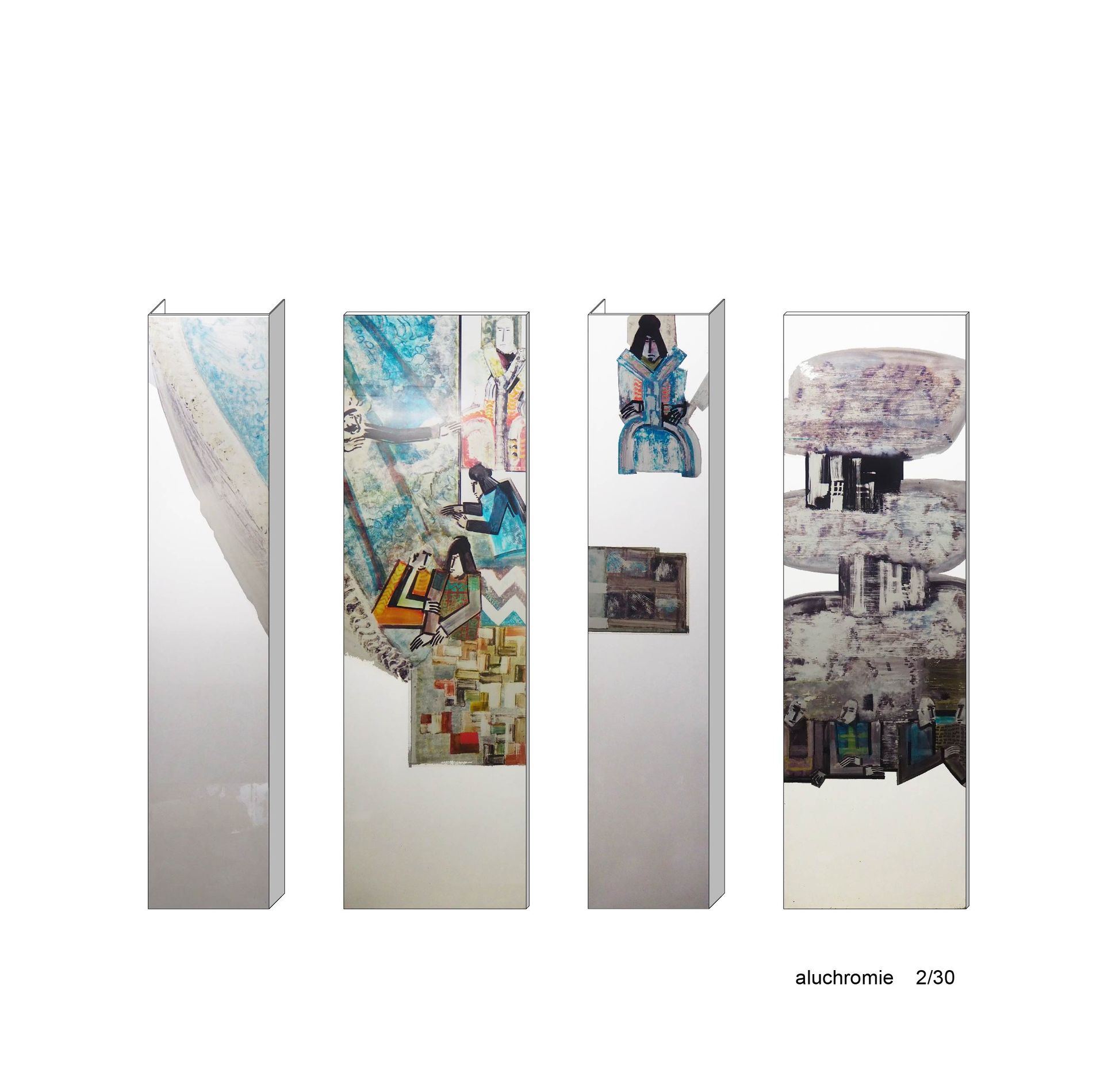
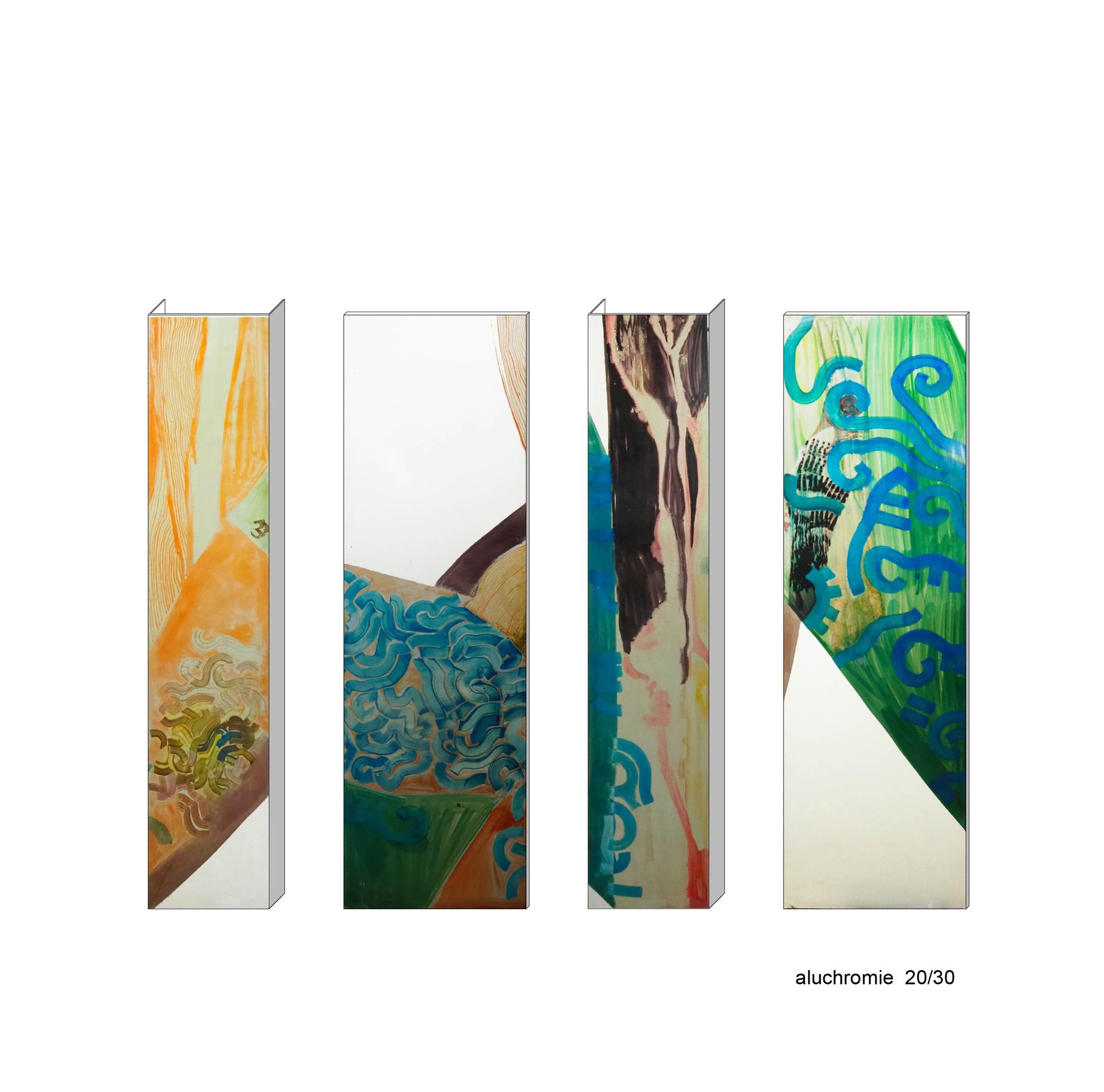
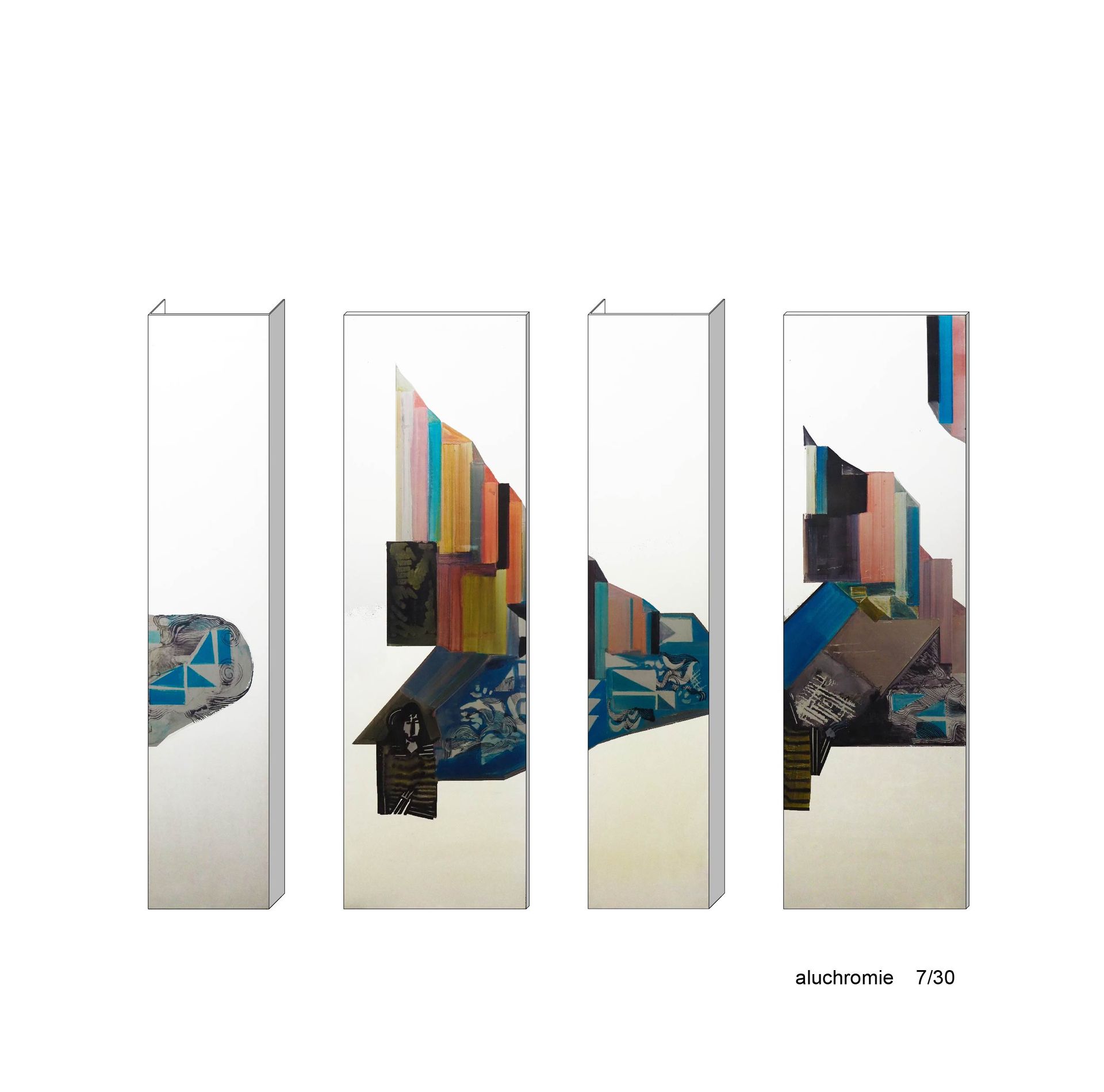
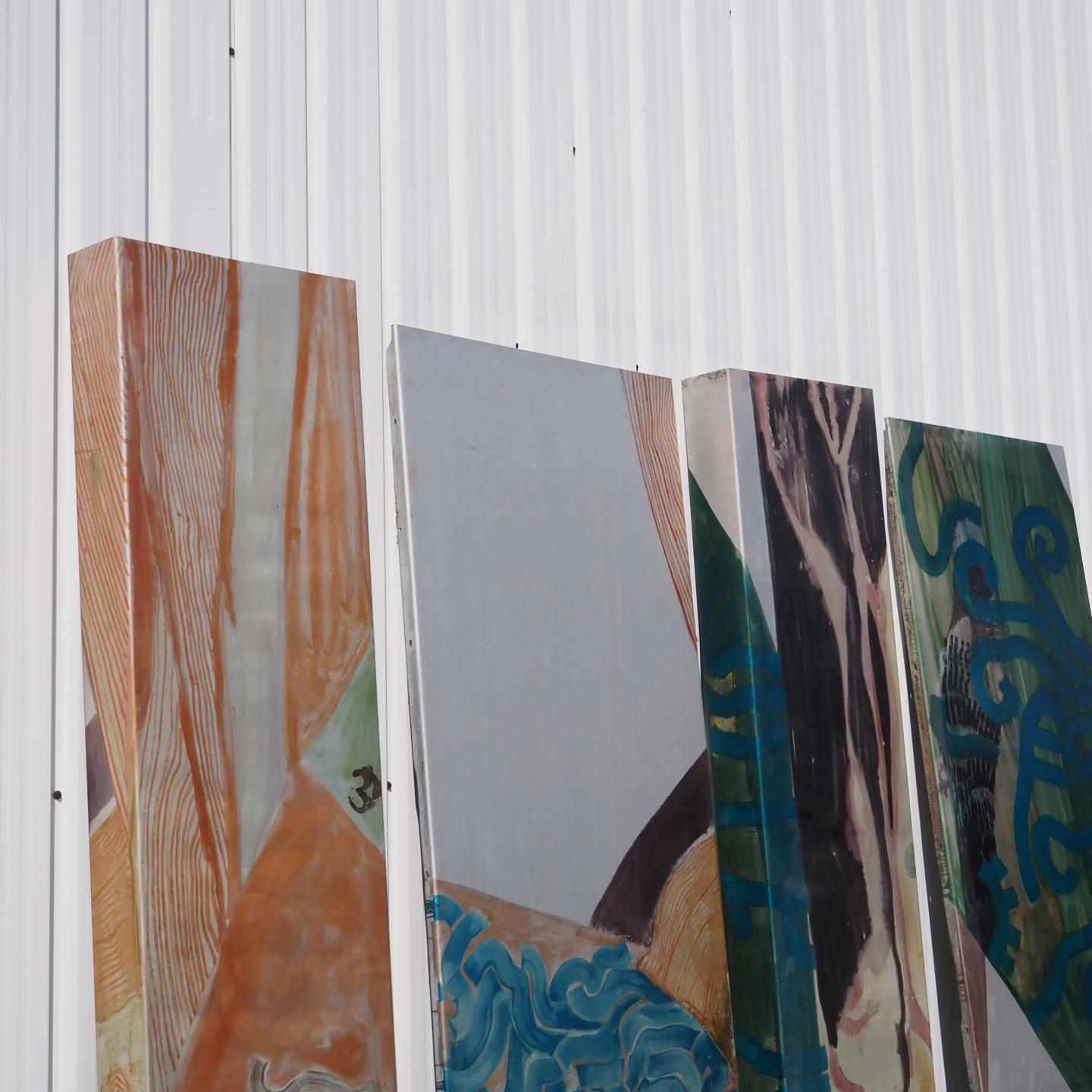
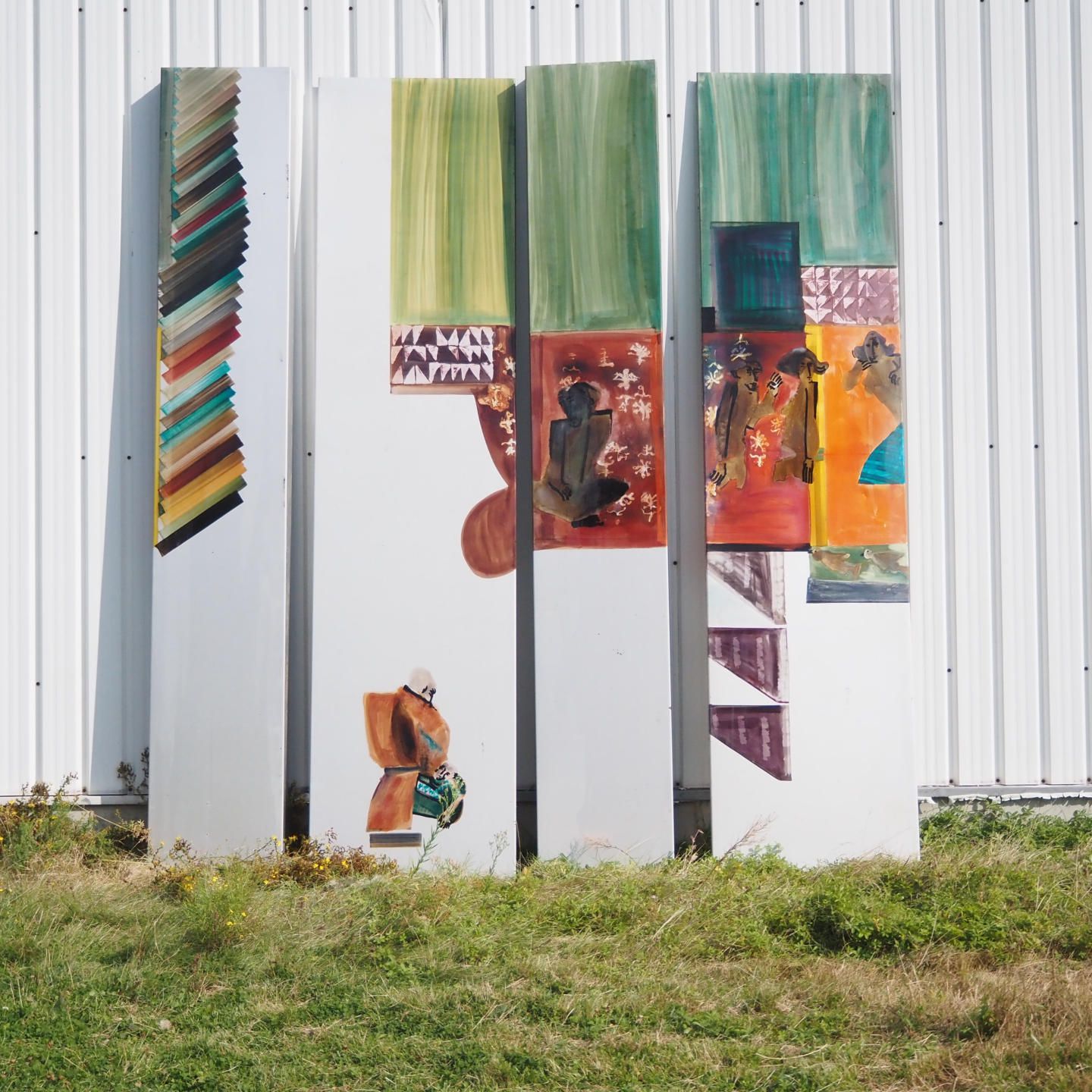
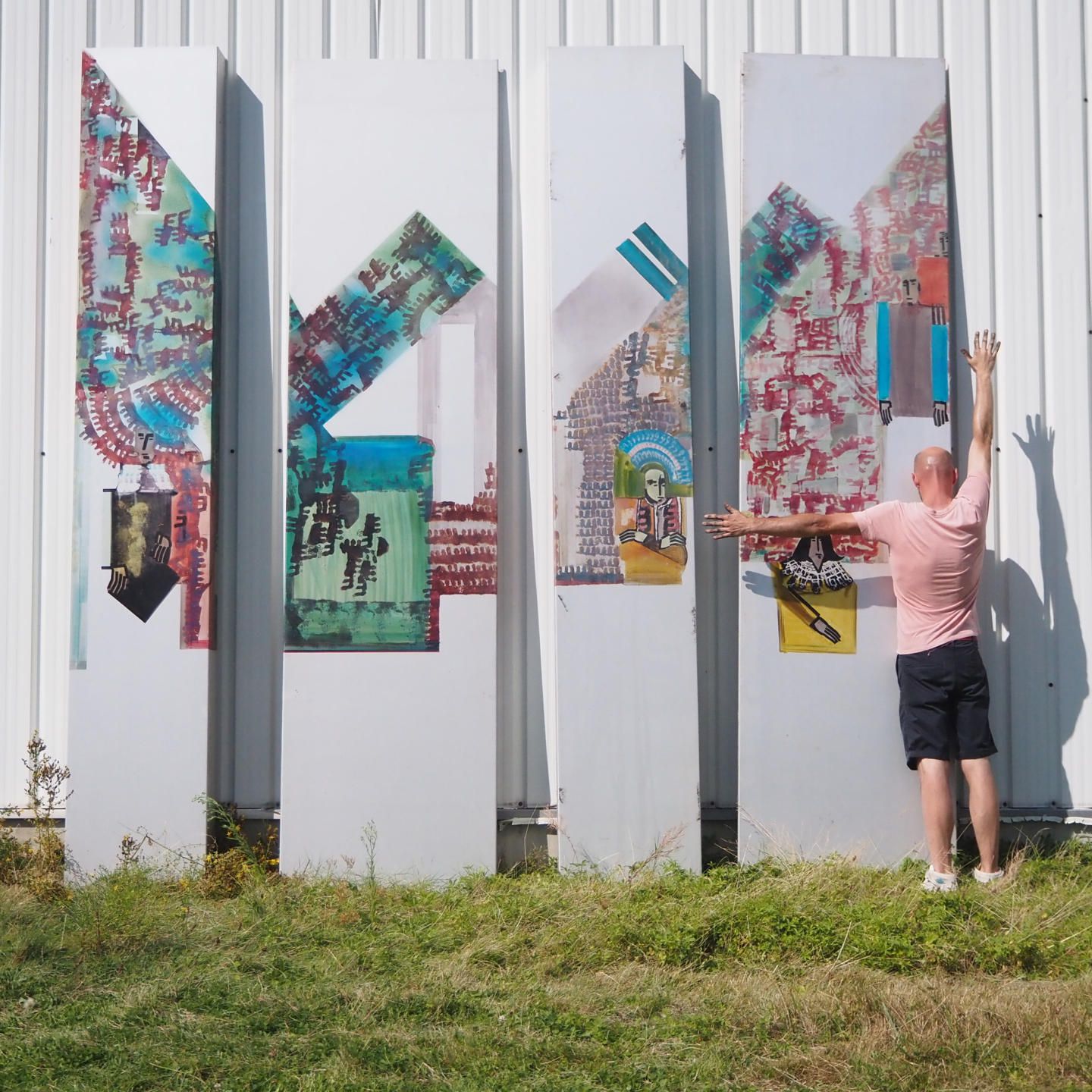
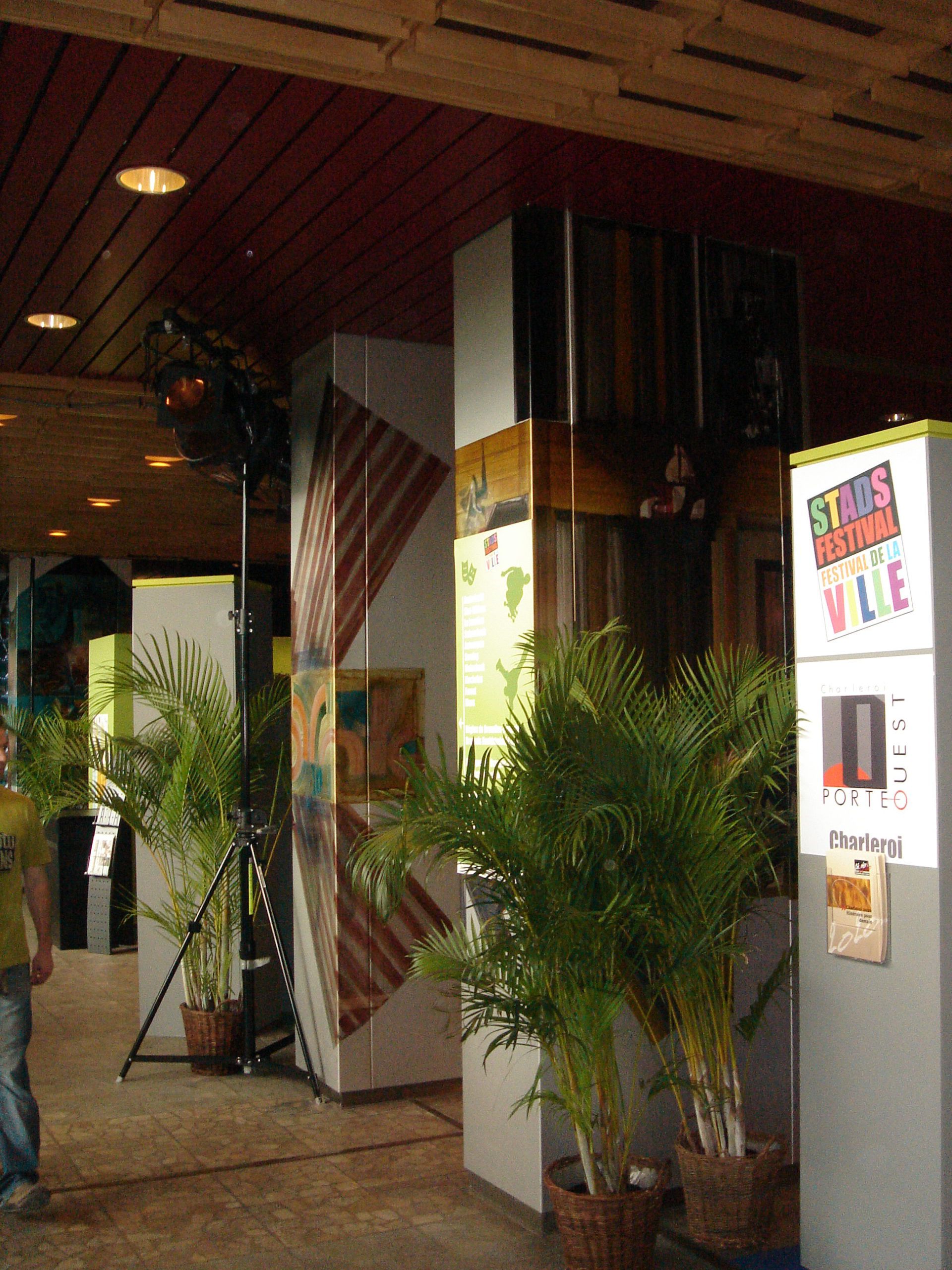
Aluchromie panels from RAC by Ralph Cleeremans, 1963
Published on 18/09/2024